919-322-0390
 fallslakedental@gmail.com

Dental Crowns in Raleigh, NC
A cracked, broken, or severely decayed tooth does not always need to be pulled. In many cases, a tooth crown restores the tooth completely, protecting it from further damage while giving you restored function and a natural appearance.
If you’re looking for dental crowns in Raleigh, we use advanced digital scanning for a more natural and precise fit. Same-day crowns are available for eligible cases, leaving you with a finished tooth in a single visit.
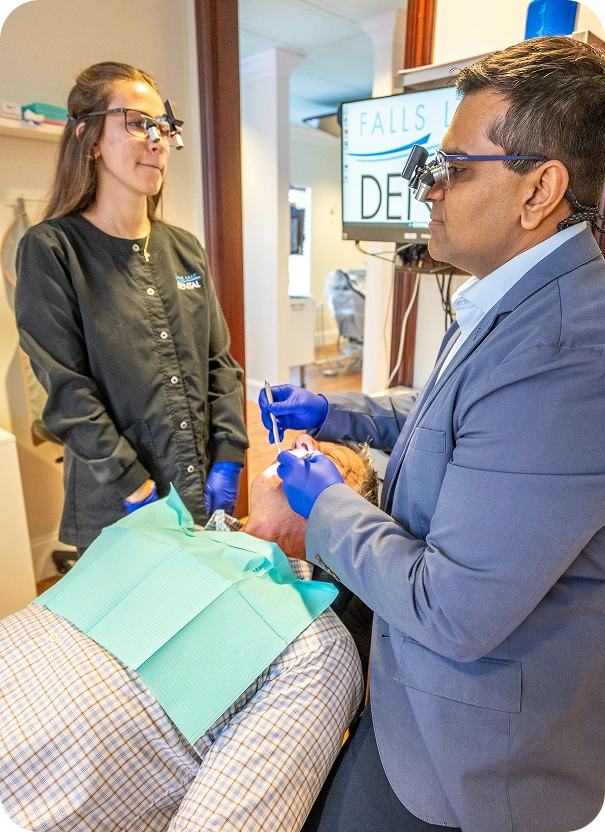
What Is a Dental Crown?
A dental crown is a cap that covers the entire visible portion of a tooth above the gumline. It restores the tooth’s shape, size, strength, and appearance when the natural tooth structure has been damaged or weakened.
Crowns are made from several materials depending on the location, function, and aesthetic needs of the tooth:
Porcelain (all-ceramic): Closely matches the color and translucency of natural teeth. Best choice for front teeth where appearance matters most.
Porcelain-fused-to-metal (PFM): A metal core covered by porcelain. Offers strength plus a natural look, used on front and back teeth.
Zirconia: Highly durable and tooth-colored. An excellent choice for back molars that handle heavy chewing forces while still looking natural.
All-metal (gold or alloy): Extremely durable, rarely chips or breaks. Most commonly used on back molars where strength is the priority and the crown is not visible when smiling.
Dr. Patel discusses material options with you based on which tooth is involved, your bite, and your preferences.
When Is a Dental Crown Needed?
A crown may be recommended when a tooth has:
- A large cavity that is too extensive for a filling to repair reliably
- A crack or fracture that reaches into the tooth’s structure
- Been weakened after root canal treatment
- Significant wear from grinding
- A broken cusp or section of the tooth
- A large old filling that has failed and left little healthy tooth structure
Crowns are also used as the visible tooth component of a dental implant and as the anchoring caps on either side of a dental bridge.
If you are unsure whether your tooth can be saved, schedule an exam with Falls Lake Dental. In many cases, a tooth that appears unsalvageable can be restored with the right treatment plan.
The Dental Crown Process at Falls Lake Dental
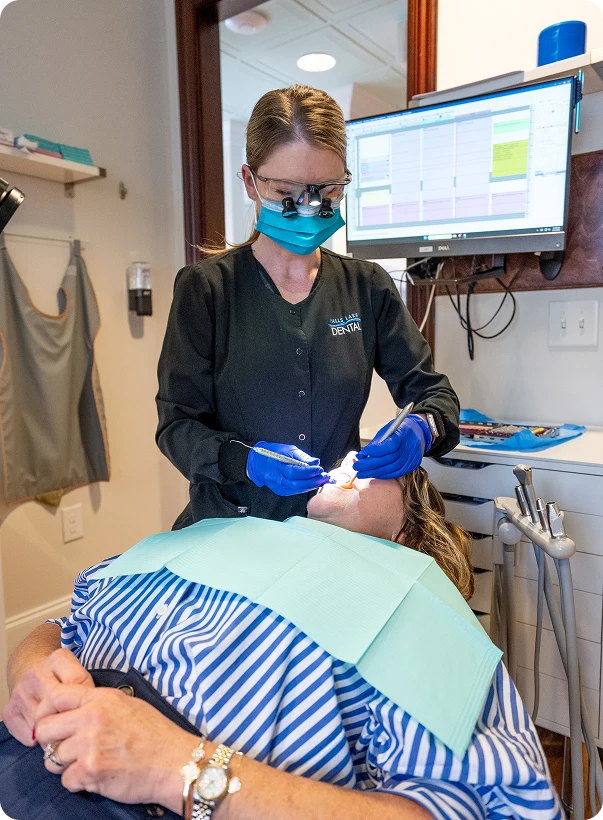
Step 1: Examination and treatment planning We take X-rays and evaluate the tooth’s structure, root health, and surrounding gum tissue. If the tooth has decay or infection, that is addressed before the crown is placed.
Step 2: Tooth preparation The tooth is shaped to make room for the crown. A small amount of enamel is removed from the top and sides so the crown fits without feeling bulky or affecting your bite.
Step 3: Impressions or digital scan We capture the prepared tooth and surrounding teeth with digital scanning for lab fabrication. A temporary crown protects the tooth while your permanent crown is made (unless you are getting a same-day crown).
Step 4: Crown fabrication Your custom crown is crafted to match the shade, shape, and bite of your natural teeth.
Step 5: Placement and adjustment The permanent crown is cemented in place and adjusted for a comfortable, precise bite. We check your bite from multiple angles before you leave.
Ready to get started? Book your crown appointment online or call (919) 322-0390.
Same-Day Crowns vs. Traditional Two-Visit Crowns
For eligible teeth, we offer same-day crowns milled in-office using digital impressions. You avoid a temporary crown, a second appointment, and the wait time for an outside lab.
Traditional two-visit crowns are still the right choice in certain situations, including teeth with more complex anatomy, cases where the gumline needs time to heal, or when a specific material requires outside lab fabrication. Dr. Patel will let you know which option applies to your tooth.
How Long Do Dental Crowns Last?
With proper care, most dental crowns last 10 to 15 years or longer. Some zirconia and all-metal crowns exceed 20 years. Longevity depends on:
- The material chosen
- Location in the mouth (back teeth face more chewing force)
- Oral hygiene habits
- Grinding or clenching habits (a nightguard protects crowns if you grind)
- Keeping regular checkups so we can monitor margins and the surrounding gum tissue
The most common reason crowns fail prematurely is decay developing at the margin where the crown meets the tooth. Good brushing and flossing at the gumline extends the life of your restoration significantly.
Cost of Dental Crowns in Raleigh, NC
Crown cost varies based on the material selected, the tooth being treated, and whether additional procedures (such as a root canal or buildup) are needed beforehand. We provide a personalized cost estimate at your exam appointment.
Most dental insurance plans cover a portion of crown treatment when it is medically necessary. We can verify your benefits before your appointment.
Financing options are available for qualified patients. Visit our new patient page for what to bring to your first visit. Contact us with any questions about coverage or payment plans.
Frequently Asked Questions
How do I know if I need a crown or a filling?
A filling works when decay or damage is limited to a small area of the tooth. A crown is needed when the damage is too large for a filling to support, the tooth is cracked, or a previous filling has failed significantly. Dr. Patel shows you exactly what is happening on the X-ray during your exam. Schedule an appointment to find out which treatment is right for you.
Does getting a crown hurt?
The tooth is numbed with local anesthetic before preparation begins. You may feel mild sensitivity in the days following the procedure, which resolves as the tooth settles. Let us know if discomfort persists beyond a few days.
Can a crowned tooth get a cavity?
The crown itself cannot decay, but the natural tooth root and the margin where the crown meets the gum can. Brushing at the gumline and flossing daily is important even after a crown is placed.
What happens if my crown falls off?
Call (919) 322-0390. Save the crown if possible and avoid chewing on that side. Our emergency dental team will get you in promptly to assess and re-cement or replace the crown.
Can I whiten my teeth if I have a crown?
Natural teeth respond to whitening; porcelain crowns do not. If whitening is a goal, we recommend doing it before crown placement so we can match the crown to your desired shade. Ask about whitening during a cosmetic dentistry consultation.
How do I care for my crown?
Brush twice daily, floss daily, attend regular cleanings, and wear a nightguard if you grind. Avoid biting hard objects like ice or hard candy.
Serving Raleigh and Surrounding Areas
Falls Lake Dental serves patients from Raleigh, North Raleigh, Wake Forest, Neuse, Falls, Millbrook, and the greater Triangle area. Visit us at 8470 Falls of Neuse Road, Suite 200, Raleigh, NC 27615.
Read what our patients say in our testimonials and browse results in our smile gallery.

8470 Falls of Neuse Road, Suite 200, Raleigh, NC 27615
Follow & Connect