 919-322-0390
 fallslakedental@gmail.com

Root Canal Treatment in Raleigh, NC
In Pain Right Now? Call (919) 322-0390
Root canals have an outdated reputation. The truth: the procedure removes the source of your pain. The infection inside the tooth was causing the discomfort. Modern anesthesia and techniques make treatment far more comfortable than most patients expect.
Dr. Chintan Patel completed an Honors Program in Endodontics during dental school and brings years of experience treating infected and damaged teeth. He explains every step before treatment begins so you are never left wondering what is happening.
If you feel anxious, ask about sedation dentistry to help you relax during your visit.
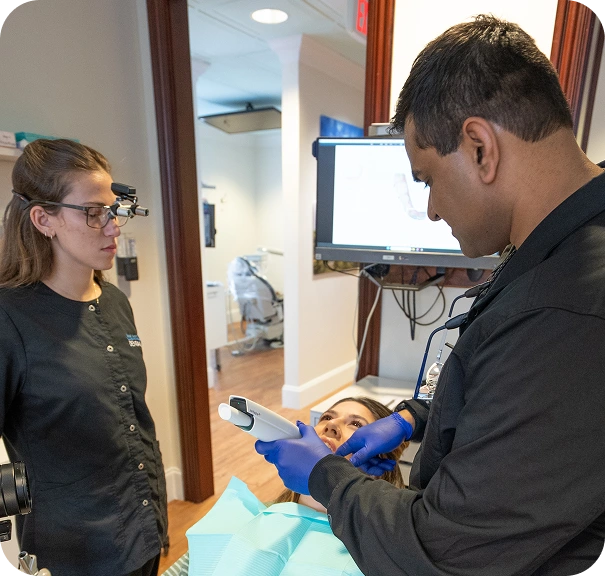
Gentle Root Canal Care When You Need It Most
Tooth pain that throbs, spikes when you chew, or keeps you up at night is not something to wait out. An infection inside the tooth will not heal on its own. Falls Lake Dental provides gentle root canal treatment in Raleigh, NC that stops the infection, relieves the pain, and saves your tooth.
Call (919) 322-0390 now or book online. Tell us you are in pain and we will do our best to see you the same day.
What Is a Root Canal?
A root canal is an endodontic procedure that removes infected or inflamed pulp from inside the tooth, cleans and disinfects the root canal system, and seals the tooth to prevent reinfection.
The pulp contains nerves and blood vessels. When bacteria reach it through a deep cavity, crack, or injury, infection develops. Without treatment, infection spreads into the surrounding bone and can lead to abscess, swelling, and tooth loss.
After root canal therapy, the tooth typically needs a crown to restore strength. Many patients complete that step with our same-day crowns using digital scanning and in-office 3D printing, often in one additional visit.


Signs You May Need a Root Canal
Contact us if you notice any of the following:
- Persistent toothache, especially pain that worsens with pressure or chewing
- Sensitivity to heat or cold that lingers after the stimulus is gone
- Swelling in the gum or jaw, or a pimple-like bump on the gum (dental abscess)
- Darkening of a tooth, which may indicate a dying pulp
- Pain that radiates to the jaw, ear, or face
- A tooth that feels slightly loose due to infection in surrounding tissues
Some infections show few symptoms until they are advanced. If something does not feel right, call (919) 322-0390 for an evaluation.
Are You a Candidate for Root Canal Treatment?
Root canal therapy is appropriate when enough healthy tooth structure remains to support a crown afterward.
Good candidates have infected or inflamed pulp, adequate tooth structure, and overall health that supports healing.
Extraction may be recommended when the tooth is too fractured or decayed to restore. If extraction is necessary, we discuss replacement options including dental implants and dental bridges so you understand the long-term impact of each choice.
Active gum disease should be managed as part of your overall oral health. Our periodontal services support gum health before and after root canal care.


The Root Canal Process at Falls Lake Dental
Step 1: Exam and imaging
Digital X-rays and a clinical exam confirm the diagnosis and show the shape of your root canals.
Step 2: Anesthesia
Local anesthesia numbs the tooth and surrounding area. Treatment begins only when you are comfortable.
Step 3: Pulp removal and cleaning
A small access opening allows removal of infected pulp. The canals are cleaned, shaped, and disinfected.
Step 4: Sealing
The canals are filled with biocompatible material and the access opening is sealed.
Step 5: Crown restoration
A crown protects the treated tooth from fracture. Our same-day crown technology streamlines this step for many patients.
What to Expect After Root Canal Treatment
Mild soreness for a few days is normal and usually responds well to over-the-counter pain relievers. Most patients return to normal activities the next day.
Avoid chewing hard foods on the treated side until your permanent crown is placed. The deep ache from infection is typically gone once anesthesia wears off.
Follow-up visits confirm healing. Maintain regular checkups to protect the treated tooth and surrounding gums long term.


Root Canal Cost in Raleigh, NC
Cost depends on which tooth is treated (front teeth vs. molars with multiple canals) and whether a crown is included in the same phase of care. We provide a clear estimate after your exam.
Financing options are available for qualified patients. New patients can review payment information before scheduling.
Frequently Asked Questions
Is a root canal painful?
You should not feel pain during the procedure due to anesthesia. Afterward, soreness is usually mild and short-lived compared to the pain of an active infection.
How long does a root canal take?
Many cases are completed in one appointment. Complex molars may require a second visit.
Can I go to work after a root canal?
Most patients return to work the same day or the next day.
Do I really need a crown after a root canal?
Most back teeth do, because they bear heavy chewing forces. Front teeth may sometimes be restored with a filling, depending on remaining structure.
What if I wait too long?
Delaying treatment risks abscess, bone loss, and tooth loss. Infection can also spread beyond the tooth.
Can you treat children or refer to pediatric care?
We serve families throughout Raleigh. Ask about our pediatric dentistry services for younger patients.
Serving Raleigh, North Raleigh, and Nearby Communities
Falls Lake Dental is at 8470 Falls of Neuse Road, Suite 200, Raleigh, NC 27615, minutes from I-540. We serve North Raleigh, Wake Forest, Neuse, Falls, Millbrook, and patients across the Triangle who need urgent, compassionate dental care.

Stop the Pain. Save Your Tooth.
Do not wait on tooth pain. Root canal treatment in Raleigh, NC can relieve your symptoms and protect your smile for years to come.