 919-322-0390
 fallslakedental@gmail.com

Dental Sealants in Raleigh, NC
The back molars are the most cavity-prone teeth in the mouth. Their deep grooves and pits trap food and bacteria that are nearly impossible to clean with a toothbrush — even with perfect brushing habits. Receiving dental sealants in Raleigh, NC coat those grooves with a thin protective layer that keeps bacteria out before a cavity has a chance to form.
The application is quick, painless, and can prevent years of fillings and restorative work.

What Are Dental Sealants?
A dental sealant is a thin plastic coating painted onto the chewing surfaces of the back teeth — primarily the molars and premolars. Once applied, the sealant bonds into the grooves and hardens, creating a smooth, easy-to-clean surface that shields the enamel from plaque and food particles.
Sealants do not replace brushing, flossing, or regular checkups — but they add a meaningful layer of protection in the areas most likely to develop cavities, particularly in children and teens who are still developing consistent oral hygiene habits.
Who Can Get Dental Sealants?
Children and teenagers benefit most, and the optimal time for sealant placement is shortly after the permanent molars come in:
- First permanent molars typically erupt around age 6
- Second permanent molars typically erupt around age 12
Applying sealants early — before cavities form — protects these teeth through the highest-risk years.
Adults can also benefit from sealants on healthy, cavity-free molars that have deep grooves. If your back teeth have not developed decay and do not already have fillings, sealants are still a viable preventive option.
Sealants cannot be applied over existing cavities. We check the tooth first to confirm it is cavity-free before sealing. Ask about sealants at your next cleaning and exam.

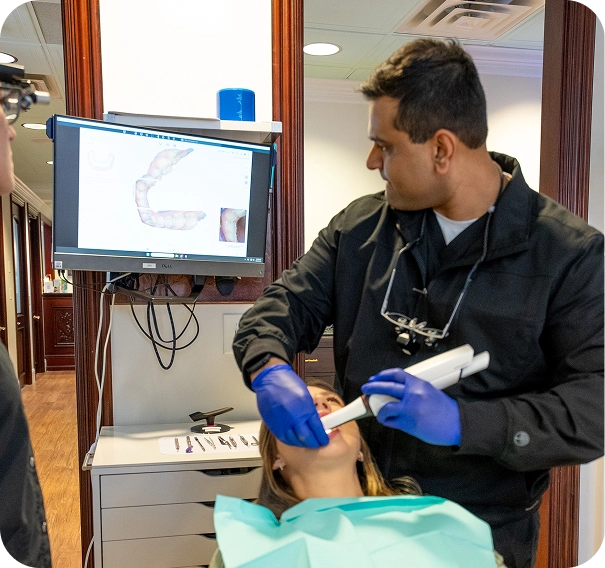
The Sealant Application Process
Sealant placement is one of the simplest procedures in dentistry. The entire process takes just a few minutes per tooth and requires no drilling or anesthesia.
Step 1: Cleaning The tooth is thoroughly cleaned and dried.
Step 2: Preparation A gentle acidic solution is applied briefly to the chewing surface to create a slightly rough texture that helps the sealant bond securely.
Step 3: Rinsing and drying The tooth is rinsed and dried completely.
Step 4: Sealant application The liquid sealant is painted onto the grooves of the tooth.
Step 5: Curing A small curing light hardens the sealant in seconds, creating a durable protective coating.
That is it. The tooth is ready to use immediately. Book your child’s sealant appointment today.
How Long Do Sealants Last?
Sealants typically last 5 to 10 years with normal use. We check the condition of existing sealants at every routine checkup and reapply them if they show signs of wear, chipping, or partial loss. As long as the sealant is intact, it continues to protect the tooth underneath.
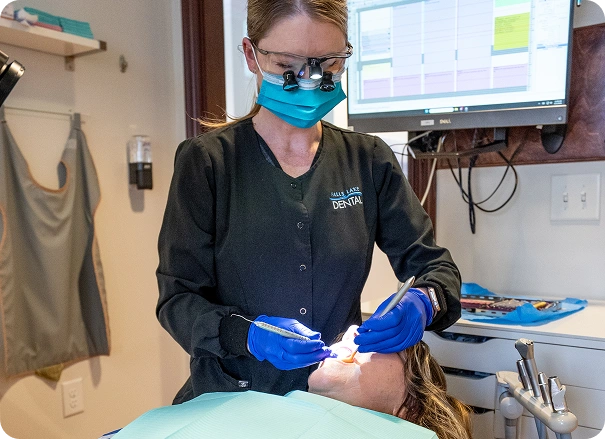
Sealants and Insurance Coverage
Most dental insurance plans cover sealants for children up to a certain age — commonly through age 14 or 16. Adult sealant coverage varies by plan. We verify your benefits before the appointment. Financing options are available for any out-of-pocket costs.
Visit our new patient page if this is your first visit to Falls Lake Dental.
Frequently Asked Questions
Do sealants hurt?
No. The process involves no injections, no drilling, and no discomfort. Children generally find the procedure easy and fast.
Can sealants go over a cavity?
No. Sealants are only placed on healthy, cavity-free tooth surfaces. If decay is present, it needs to be treated with a filling first. We examine each tooth before applying sealants.
Are sealants safe?
Yes. Dental sealants have been used for decades and are endorsed by major dental and public health organizations. They contain no known harmful ingredients in the quantities used during application.
My child brushes well — do they still need sealants?
Brushing reaches the flat surfaces of teeth but often cannot fully reach deep into the pits and fissures of molars. Sealants fill those gaps. Good brushing and sealants work together — they are not alternatives to each other.
Can a sealant come off?
Sealants can chip or wear over time, especially with heavy chewing. That is why we check them at every visit. A partially missing sealant should be reapplied promptly — partial coverage still leaves the tooth partially vulnerable.
Do adults really benefit from sealants?
Yes, if the molars are healthy and have deep grooves. Adults who have cavity-free back teeth with no existing restorations are good candidates. Ask Dr. Patel at your next checkup whether your teeth would benefit.
Serving Raleigh and Surrounding Areas
Falls Lake Dental serves patients from Raleigh, North Raleigh, Wake Forest, Neuse, Falls, Millbrook, and the greater Triangle area. Visit us at 8470 Falls of Neuse Road, Suite 200, Raleigh, NC 27615.
See what families say about us in our testimonials.

8470 Falls of Neuse Road, Suite 200, Raleigh, NC 27615
Follow & Connect
We welcome patients of all ages.