919-322-0390
 fallslakedental@gmail.com

Halitosis Treatment in Raleigh, NC
Everyone has bad breath occasionally — after a meal, first thing in the morning, or when dehydrated. But when bad breath is persistent despite regular brushing, flossing, and mouthwash, it is usually a sign of an underlying dental or medical issue that needs professional attention.
Falls Lake Dental offers halitosis treatment in Raleigh, NC focused on diagnosing the actual cause of chronic bad breath and treating it directly.
What Causes Chronic Bad Breath?
Bad breath (halitosis) that persists despite good oral hygiene usually has one of the following underlying causes:
Gum disease (periodontal disease): The most common dental cause. Bacteria living in pockets below the gumline produce sulfur compounds that cause a distinct odor. Without periodontal treatment, the bacteria and odor persist regardless of how well you brush.
Tooth decay: Active cavities harbor bacteria that produce foul-smelling byproducts. Treating the cavity with a filling or crown resolves this source.
Dry mouth (xerostomia): Saliva neutralizes acids and washes away bacteria. When saliva production is reduced — often due to medications, mouth breathing, or certain health conditions — bacteria accumulate and odor increases.
Tongue bacteria: The tongue’s surface traps bacteria, food particles, and dead cells, particularly toward the back. This is often overlooked in standard brushing routines.
Old or failing dental work: Cracked fillings, leaking crowns, or poorly fitting dental appliances can trap food and bacteria.
Systemic conditions: Occasionally, bad breath originates from outside the mouth — sinus infections, acid reflux, respiratory conditions, or metabolic disorders. If a dental source cannot be found, we refer you to the appropriate specialist.
How We Diagnose and Treat Halitosis
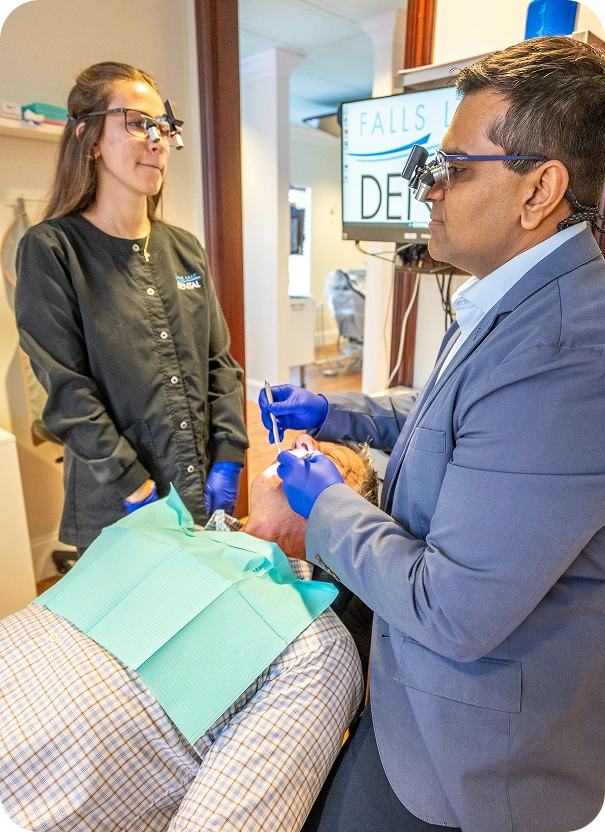
Step 1: Comprehensive exam We examine teeth, gums, tongue, and soft tissue for signs of decay, gum disease, infection, or other contributors. X-rays may be taken to check for hidden decay or bone loss.
Step 2: Gum evaluation We measure gum pocket depths to assess whether periodontal disease is present. Gum disease is the most common treatable dental cause of persistent bad breath.
Step 3: Identifying the source Based on the exam findings, we identify the primary cause and explain it clearly. Some cases involve multiple contributing factors.
Step 4: Treatment Treatment targets the actual source — whether that means a professional cleaning, periodontal therapy, cavity treatment, or hygiene guidance for tongue cleaning and dry mouth management.
Step 5: Follow-up We schedule a follow-up to confirm improvement and monitor gum health. Many patients see a significant improvement after one or two professional treatments.

Home Care for Bad Breath
Professional treatment addresses the underlying cause, but daily habits determine long-term results:
- Brush twice daily — including the back of the tongue
- Floss once daily — food and bacteria between teeth are a primary odor source
- Stay hydrated — water stimulates saliva production and rinses the mouth
- Use an antibacterial mouthwash — as a supplement, not a substitute for brushing and flossing
- Keep regular checkups — professional cleanings remove tartar buildup that brushing cannot address
- Replace your toothbrush every 3 months or sooner if bristles are frayed
If dry mouth is a contributing factor, we can recommend saliva substitutes or discuss adjusting medications with your physician.
Frequently Asked Questions
Is bad breath always a dental problem?
Usually, yes — the majority of chronic bad breath originates in the mouth, most commonly from gum disease or the tongue. Occasionally it comes from the throat, sinuses, stomach, or metabolic conditions. A dental exam is the logical first step to rule out oral causes.
Can mouthwash cure bad breath?
No. Mouthwash temporarily reduces bacteria and masks odor, but it does not treat the underlying cause. If gum disease or decay is driving the bad breath, mouthwash will not solve it.
I brush and floss regularly — why do I still have bad breath?
Good oral hygiene reduces but does not always eliminate the cause. Bacteria living in gum pockets below the gumline, old restorations with micro-gaps, or a dry mouth can all cause persistent odor despite thorough brushing. A professional evaluation finds what home care cannot.
Will treating my gum disease eliminate bad breath?
In most cases, yes — if gum disease is the primary cause. After periodontal treatment and consistent maintenance, most patients see a significant improvement in breath odor.
Is halitosis treatment covered by insurance?
The underlying treatments — cleanings, fillings, periodontal therapy — are covered by most dental insurance plans to varying degrees. We verify your benefits before treatment. Financing options are available for qualified patients.
Serving Raleigh and Surrounding Areas
Falls Lake Dental serves patients from Raleigh, North Raleigh, Wake Forest, Neuse, Falls, Millbrook, and the greater Triangle area. Visit us at 8470 Falls of Neuse Road, Suite 200, Raleigh, NC 27615.
Read what patients say in our testimonials.

8470 Falls of Neuse Road, Suite 200, Raleigh, NC 27615
Follow & Connect